


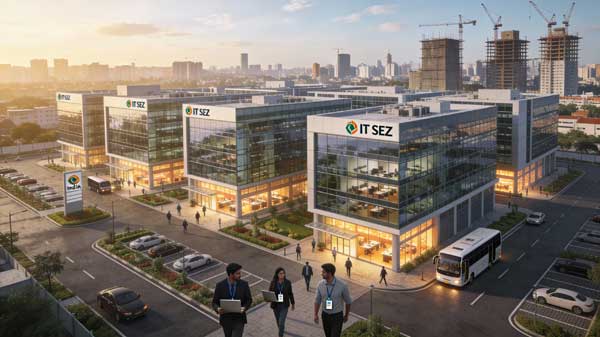
Demand for office space in Special Economic Zones (SEZs) stayed surprisingly resilient in early 2020, with several large occupiers rushing to close leases despite the March 31 sunset date for key income‑tax benefits. Far from stalling, SEZ transactions were driven by consolidation, long‑term cost savings and occupiers’ confidence in India’s technology and services export story.
Sunset clause backdrop
- The SEZ regime offered graded income‑tax holidays under Section 10AA, but new units were required to commence operations before March 31, 2020 to qualify, creating a clear deadline for investors.
- Even as policy debates intensified over extending or relaxing the sunset date, the government only allowed limited relief by pushing some compliance and incentive deadlines into mid‑2020 in view of emerging COVID‑19 disruptions.
Leasing momentum into March 2020
- Office demand was coming off a record year; gross leasing in 2019 touched an all‑time high of about 61–62 million sq ft across major cities, with SEZ parks accounting for a significant share of technology‑led take‑up.
- Knight Frank’s early‑2020 tracking showed that office transactions in Q1 2020 remained strong before the full impact of lockdowns, reflecting pre‑committed deals and expansion plans by IT, ITeS and Global Capability Centres that heavily favored SEZ campuses.
Why occupiers still chose SEZs
- Large technology and services firms continued to prefer SEZs for long‑term fiscal efficiency, campus‑style infrastructure and access to skilled talent, even as the direct tax arbitrage was set to narrow after March 31.
- Many occupiers accelerated decision‑making—either expanding existing SEZ footprints or securing new spaces—so that projects could be operationally ramped up within the eligibility window, effectively front‑loading demand into late 2019 and the first quarter of 2020.
Developer and investor stance
- Developers with large IT/ITeS SEZ portfolios viewed the sunset date as a trigger to aggressively market ready and nearly‑completed inventory, banking on the fact that Grade‑A SEZ rentals remained competitive versus comparable CBD and non‑SEZ business parks.
- Institutional investors and REIT‑backed landlords, already heavily exposed to export‑oriented office assets, treated the tax change as a manageable policy shift rather than a structural threat, relying on sticky occupier demand and long lease tenures.
Outlook beyond the sunset date
- Analysts expected some moderation in fresh SEZ inquiries once new units lost eligibility for income‑tax holidays, but did not foresee a collapse in occupancies, given that many large campuses had already secured multi‑year commitments.
- Policy discussions around amending SEZ rules, easing de‑notification norms and allowing more flexible use of built‑up space suggested that, even beyond the March 31 cut‑off, SEZ business parks would continue to evolve as core hubs of India’s modern office market.

Demand for office space in SEZs on the rise despite sunset date of March 31 added by admin on
View all posts by admin →